How to get sports sponsors: a complete guide
Guía paso a paso para conseguir patrocinadores deportivos: qué ofrecer, a quién dirigirte y cómo poner precio a tu equipación.
If you train twice a week, pay for referees out of your own pocket, and still play in jerseys from three seasons ago, you've probably already wondered how to get sports sponsors for your team. The good news is you don't need to be a professional club to pull it off: you need to frame the proposal well and know who and how to approach.
What local companies are really looking for
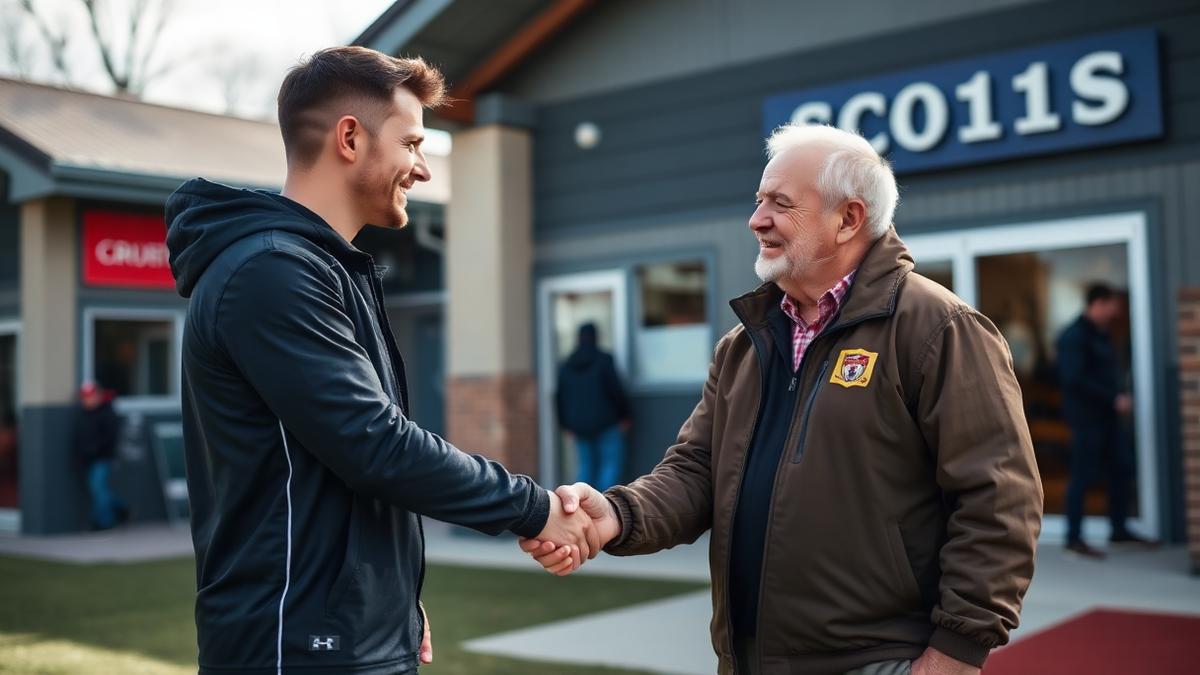
Small businesses in your neighborhood or town aren't looking for a TV ad. They're looking for something much simpler: for people in their area to see them, remember them, and trust them. A local team, with a familiar name and face, fits that goal perfectly.
- Constant visibility with a group that sees you every week: families, neighbors, fans.
- Association with positive values such as effort, health, or teamwork.
- Presence on the club's social media, which often has more reach than you'd imagine.
- A sense of "giving back" to the neighborhood, something many businesses genuinely value.
What an amateur team can really offer
You don't need thousands of followers to have something valuable. Your team already has assets a company can leverage, you just need to know how to present them.
- Kit zones: chest, back, sleeve or shorts, each with its own value and price.
- Physical presence at every match, training session and away trip, in front of families and rivals.
- Instagram and other social media posts tagging and mentioning the sponsor.
- A real community: players, families, friends and fans who follow the team season after season.
The value of closeness
A neighborhood sponsor doesn't compare your team to Real Madrid, they compare it to the option of not sponsoring anyone. Against that, your proposal usually wins easily if you know how to explain it well.
How to price your sponsorship
Setting a price feels daunting the first time, but there are indicative ranges you can use as a reference depending on zone and visibility. As an estimate, a sleeve or shorts tend to fall into more modest amounts, while the chest or back — the most-seen zones — reach higher figures. Always adjust based on the number of matches, your social reach, and the team's category.
A simple trick: define three or four packages with different prices depending on the zone, so the company can choose without having to negotiate from scratch with you.
Who to approach first
Start with businesses you already know: the salon half the squad goes to, the bar where you celebrate wins, a teammate's gym. These are much easier conversations than with an unfamiliar company.
- Shops and hospitality businesses in the club's neighborhood or town.
- Companies where players' or board members' relatives work.
- Sports-related businesses: shops, physiotherapists, nutritionists.
- Brands that already sponsor local events or town fairs.
Common mistakes when looking for sponsorship
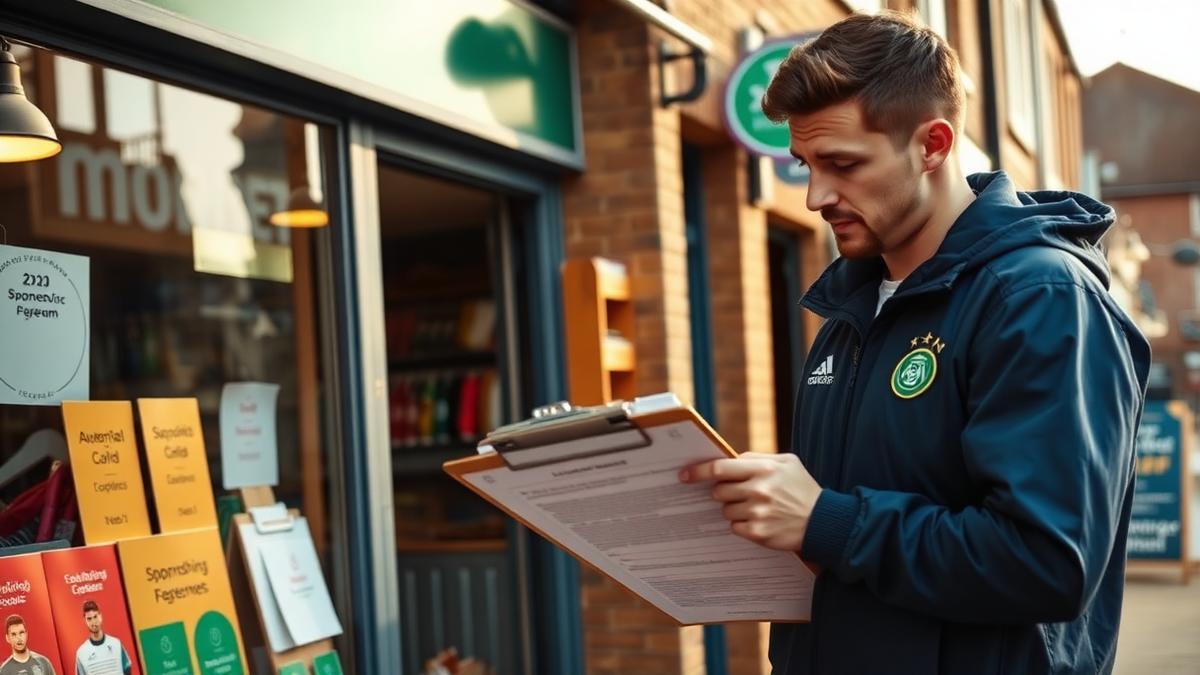
Many teams lose opportunities over details that can easily be avoided with a bit of preparation.
- Asking for money without explaining what the company gets in return.
- Not being clear on which kit zones are free and which are already committed.
- Taking weeks to respond or to send the proposal.
- Not putting anything in writing, which generates distrust on both sides.
A clear proposal, with defined prices and considerations, closes more deals than a thousand improvised calls.
How Patrosport simplifies the whole process
Signing up on Patrosport is free and lets you show your available kit zones to companies already looking to sponsor teams like yours. You only pay a management fee once you secure sponsorship, with tiers that decrease as the amount raised grows: from 14% for deals of €100 to €500 down to 6% for those above €6,000.
The company, for its part, doesn't pay a management fee: it only covers the manufacturing and shipping of the patches once the match is finalized, and your team's patch manufacturing is already included in your fee. Once the deal is closed, you sign a sponsorship contract electronically and the team commits to an Instagram post tagging the sponsor, so both parties are protected with clear terms from day one.
If you want to stop chasing companies one by one and focus on playing, the first step is to create your team profile and let interested companies find you.
Summary to get started today
- 1Define which kit zones you can offer and at what indicative price.
- 2Make a list of nearby businesses you already have some relationship with.
- 3Prepare a brief proposal with photos, social reach, and clear considerations.
- 4Contact the easiest option first and use that experience to improve the rest.
- 5Use platforms like Patrosport to reach companies already looking to sponsor teams.
Getting sponsors doesn't depend on luck, it depends on clearly showing what your team can offer and reaching out to those who truly value that closeness. With consistency and a well-built proposal, it's only a matter of time before the first yes comes.
Ready to get sponsorship for your team?
Sign up for free and start receiving proposals from like-minded companies.
Register my team for free