
Sports sponsorship and Corporate Social Responsibility: the impact of investing in grassroots sport
Cómo encaja el patrocinio del deporte base en tu estrategia de Responsabilidad Social Corporativa y qué impacto genera.
More and more companies are looking for real ways to turn their corporate social responsibility into something tangible, something noticeable in the neighbourhood, town or city where they operate. Sponsoring grassroots sport is one of those routes: close to home, measurable, and with an impact that goes far beyond a logo on a shirt. In this article we look at how this type of sponsorship fits into a CSR strategy and what to bear in mind to do it well.

Grassroots sport sponsorship within corporate social responsibility
Corporate social responsibility isn't just about publishing a sustainability report once a year. It's about concrete decisions that generate a real benefit in the environment where the company operates. Sponsoring a grassroots sports club, whether a football, basketball, handball or any other team, is one of those decisions: it provides resources to an organisation that educates through sport, and in return the company gains visibility and a positive association with its brand.
Unlike other, more abstract CSR actions, here the impact can be seen: children playing with decent kit, families who don't have to bear excessive fees, clubs able to keep training athletes season after season.
The real impact on the club and the community
When a company sponsors a grassroots team, that money doesn't remain an abstract concept. It translates into very specific day-to-day needs of the club:
- Reduction of the fees families pay to register their children.
- Renewal of sports kit, which tends to wear out every season.
- Covering travel to matches and tournaments outside the local area.
- Equal access and resources between women's and men's teams.
- Keeping youth categories running that, without external support, risk disappearing.
This kind of impact is especially relevant for women's teams and youth categories, which have historically received fewer resources than men's or senior teams. Backing them through corporate social responsibility is a direct way to contribute to equal opportunities in local sport.
Sponsorship or donation: what's the difference
It's common to confuse sports sponsorship with a donation, but they are different mechanisms. A donation is a financial contribution with no direct return. Sponsorship, on the other hand, is an exchange: the company provides the resources for manufacturing and shipping the patches with its brand, and in return gets a presence on the team's kit, a contract formalised with an electronic signature, and a post from the club on Instagram tagging the company.
This difference matters because it turns sponsorship into a doubly useful tool: on the one hand, it fulfils a genuine social function, and on the other, it generates a brand return that can be tracked and communicated. Neither of these is at odds with the other.
A model with no management cost for the company
On Patrosport, companies don't pay any management fee to find a team: they only cover the cost of manufacturing and shipping the patches once the match is formalised. It's the team that pays a management fee, with tiers that decrease depending on the amount raised. This makes sponsorship accessible even for companies with modest CSR budgets.
How to communicate sponsorship without sounding self-serving
One of the biggest risks when communicating a CSR action is that it sounds hollow or opportunistic. To avoid this, it helps to follow a few simple guidelines:
- 1Talk about the club and its people, not just about your company.
- 2Show the real use of the resources provided, without exaggerating the impact.
- 3Avoid grandiose comparisons; grassroots sport doesn't need superlatives.
- 4Let the club itself share its experience on its own channels, naturally.
- 5Keep the commitment going over time, don't turn it into a one-off PR stunt.
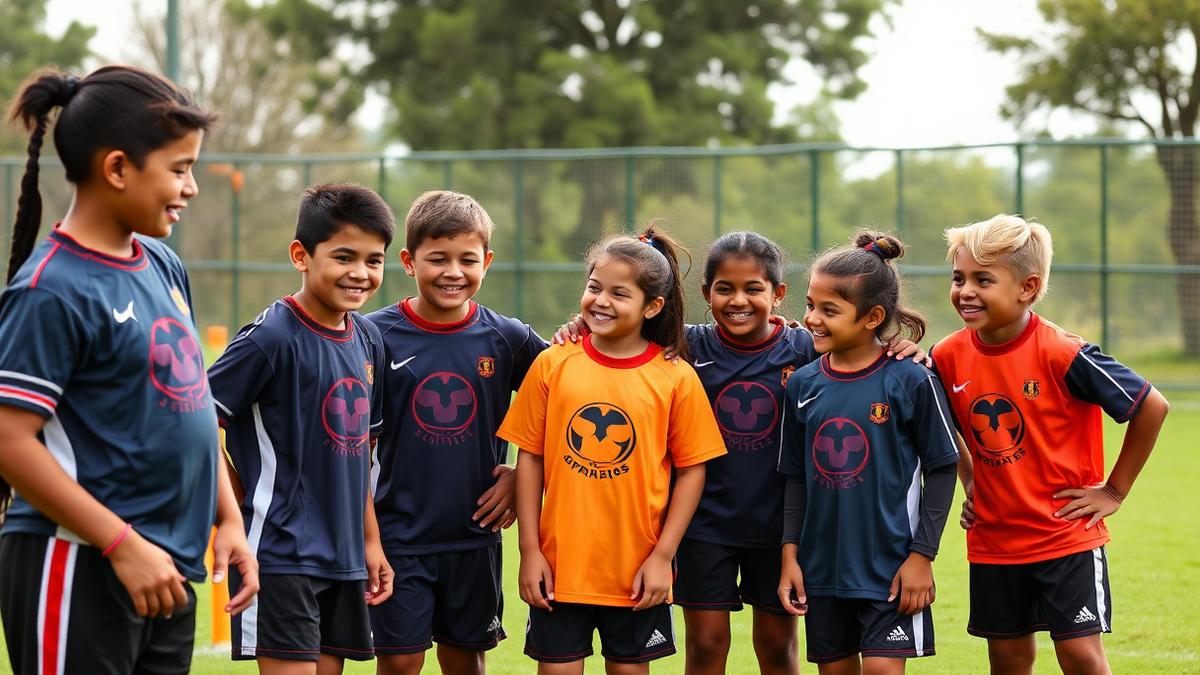
Authenticity shows. If your company genuinely stays involved with the club throughout the season, that consistency is felt both by the team's families and by your own customers.
Criteria for choosing the right club
Not every club fits equally well with the corporate social responsibility values your company wants to convey. Before deciding, it's worth considering:
- Whether the club actively works on its youth academy and lower categories.
- Whether it has women's teams and how it distributes resources among them.
- The club's geographic proximity to your company and your employees.
- The club's social commitment to its community, beyond sporting results.
If your company wants to take this step, you can find out how team sponsorship works and find a club that fits your CSR strategy.
How to report the impact of your sponsorship
For sponsorship to make sense within a CSR report, it's worth documenting the impact with concrete data from the agreement itself: the amount allocated to manufacturing the kit, the number of athletes benefited, the duration of the signed contract, and the reach of the posts the club shares on social media.
Corporate social responsibility is best demonstrated with a shirt worn, not with a thousand words in an annual report.
Ultimately, investing in grassroots sport isn't just good communications practice: it's a concrete way of giving something back to the community where your company grows. And over time, that consistency becomes part of your brand's identity.
Want to sponsor a team?
Tell us what you're looking for and we'll introduce you to teams that fit your brand.
Register my company